
Menorika

The problem.
The true value of an auction house typically remains offline: sales archives, artist intelligence, catalogs, lot lists, bidding histories, and valuation expertise. Collectors and researchers struggle to find data on creators or past sales, while art trading, educational events, publications, and auctions operate in silos without reinforcing one another. Historical auction data holds real market value, yet cannot be monetized without a proper digital product.
What we built.
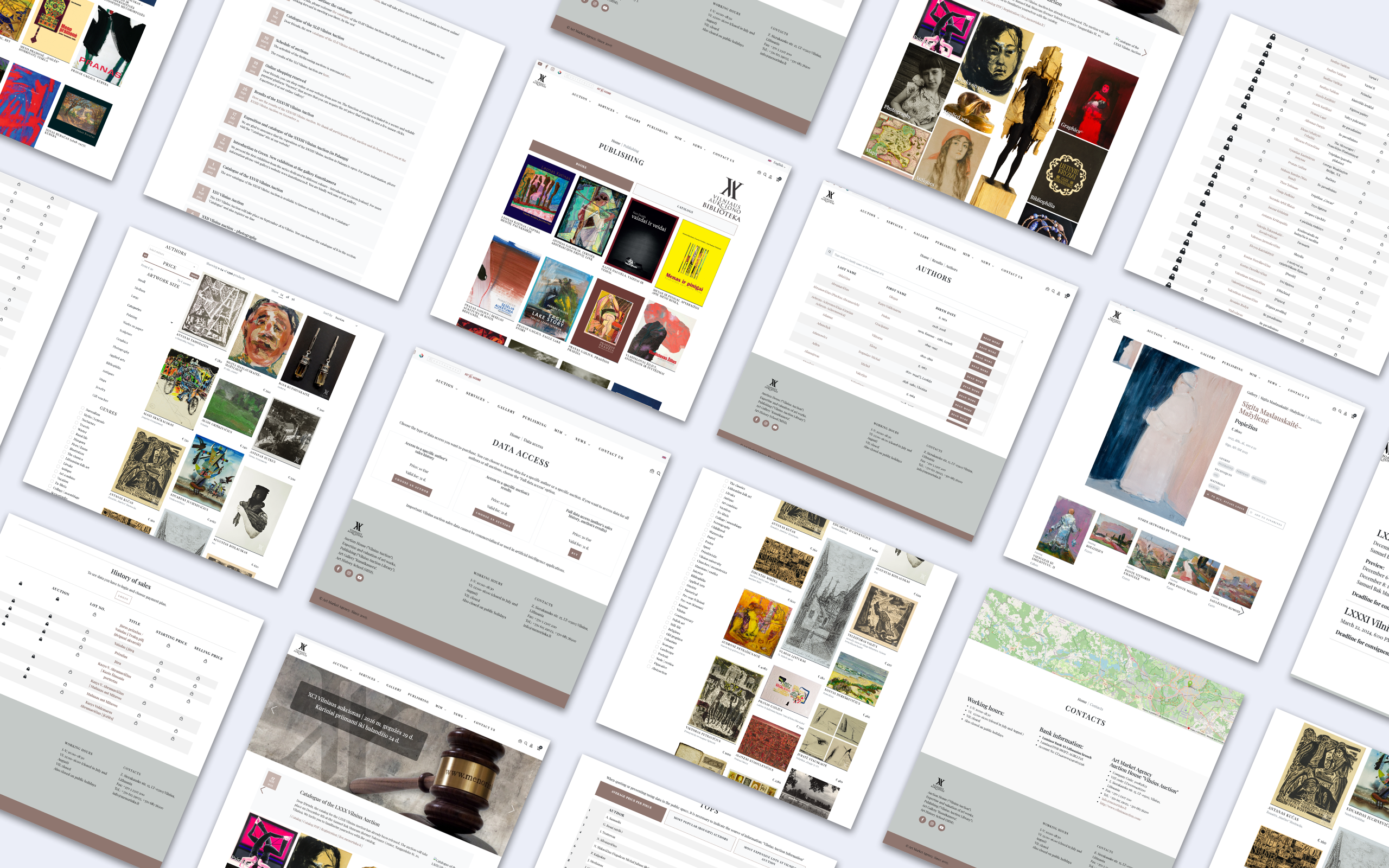
We built a centralized database of artworks, authors, auctions, and transaction histories, serving as the foundation for user-facing modules. The same piece of content can act as an author page, a gallery item, a sales archive entry, a ranking, an auction lot, a news post, or a course. This approach empowers a single institution to manage commerce, archives, research, and education from one unified system.
- Auction module: schedules, lot catalogs, results, and a comprehensive archive
- Author database: biographies, currently available gallery works, and sales histories
- Gallery e-commerce: filtering by price, size, category, and genre; favorites; and authenticated checkout
- Paid data access: available per author, per auction, or as full access valid for 31 days
- Rankings and market analytics: average artwork prices, trending authors, and highest-grossing lots
- Courses and ticketing, publishing, plus a media and PR archive
- Lost Art Items: a catalog of missing artworks to support provenance and restitution processes
Check out the ui.
The hard part.
We implemented a complex relational architecture linking artworks, authors, lots, auctions, transactions, publications, and courses. A clear division between public and gated content: biographies are open, while sales histories require paid access. The checkout flow handles non-standard products, including physical artworks, data access, courses, tickets, and books. We also digitized decades of archives, providing pagination, indexing, and an admin-friendly interface for managing large datasets.
What changed.
- New revenue streams beyond physical artwork sales: data access, courses, tickets, and publications
- Historical auction data successfully transformed into a profitable digital product
- Increased trust through open archives, detailed artist profiles, and transparent market histories
- A content and SEO funnel that drives leads to a high-ticket business