
OffenderWise
The problem.
These organisations track hundreds of supervised people. Each has several cases, payments, restrictions, monitoring events, documents and responsible agents, spread across Excel, PDFs, email and separate systems.
The result is loss of control, human error, missed violations, legal exposure and overloaded agents.
What we built.
An operating system rather than a CRM. The offender sits at the centre of the work. Cases, projects, payments, monitoring, documents, agents and time sit around them as contextual layers. Agents, supervisors and admins share one environment.
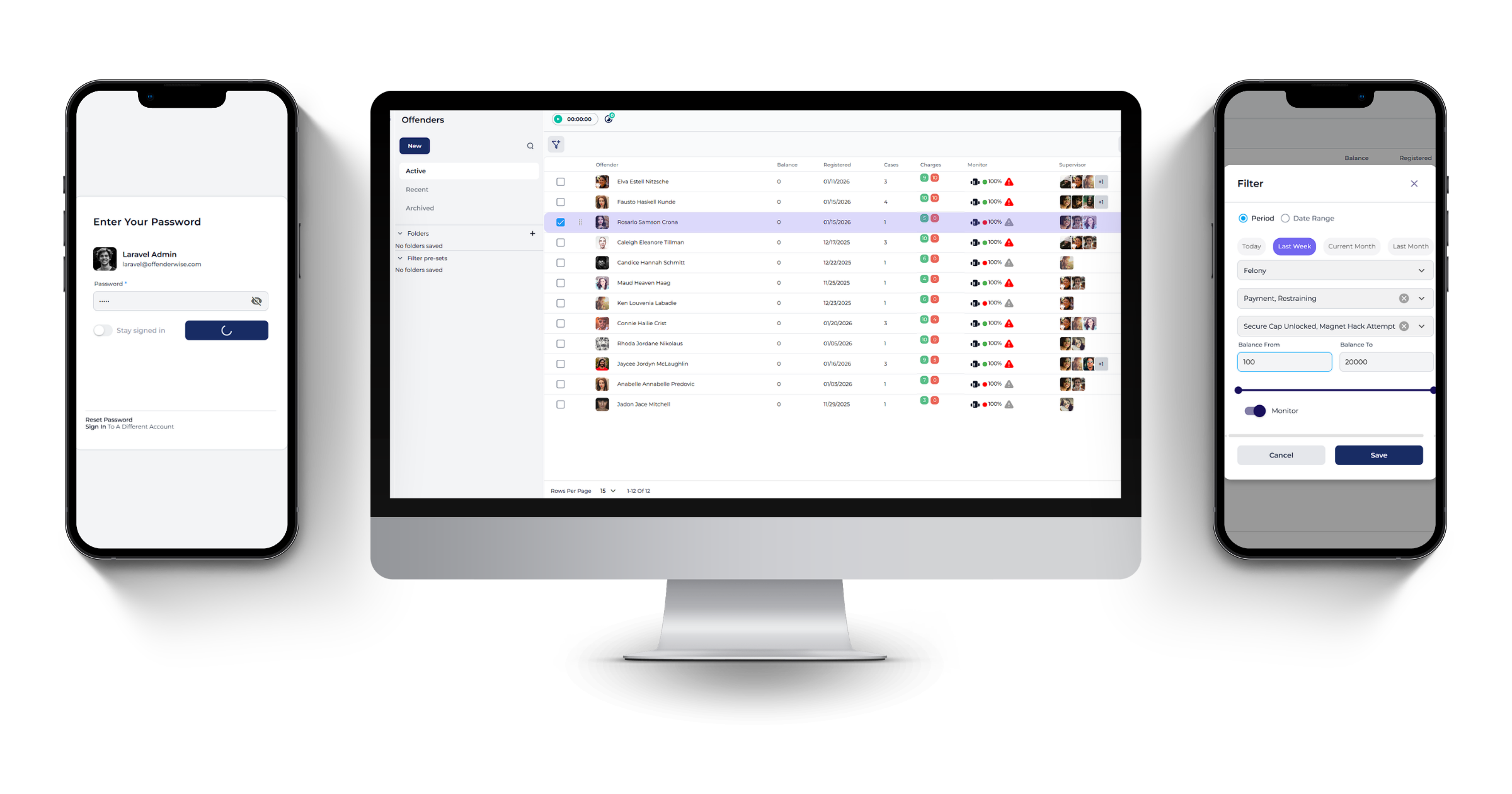
- An offenders list that works as an operational dashboard: balance, registration date, case count, colour coded charges, monitoring status, assigned supervisors
- Filters by period, violation type, event type, financial range and monitoring state, answering who needs attention right now
- Monitoring with percentages and alerts that surface risk early
- Legally significant case file management bound to offender and case
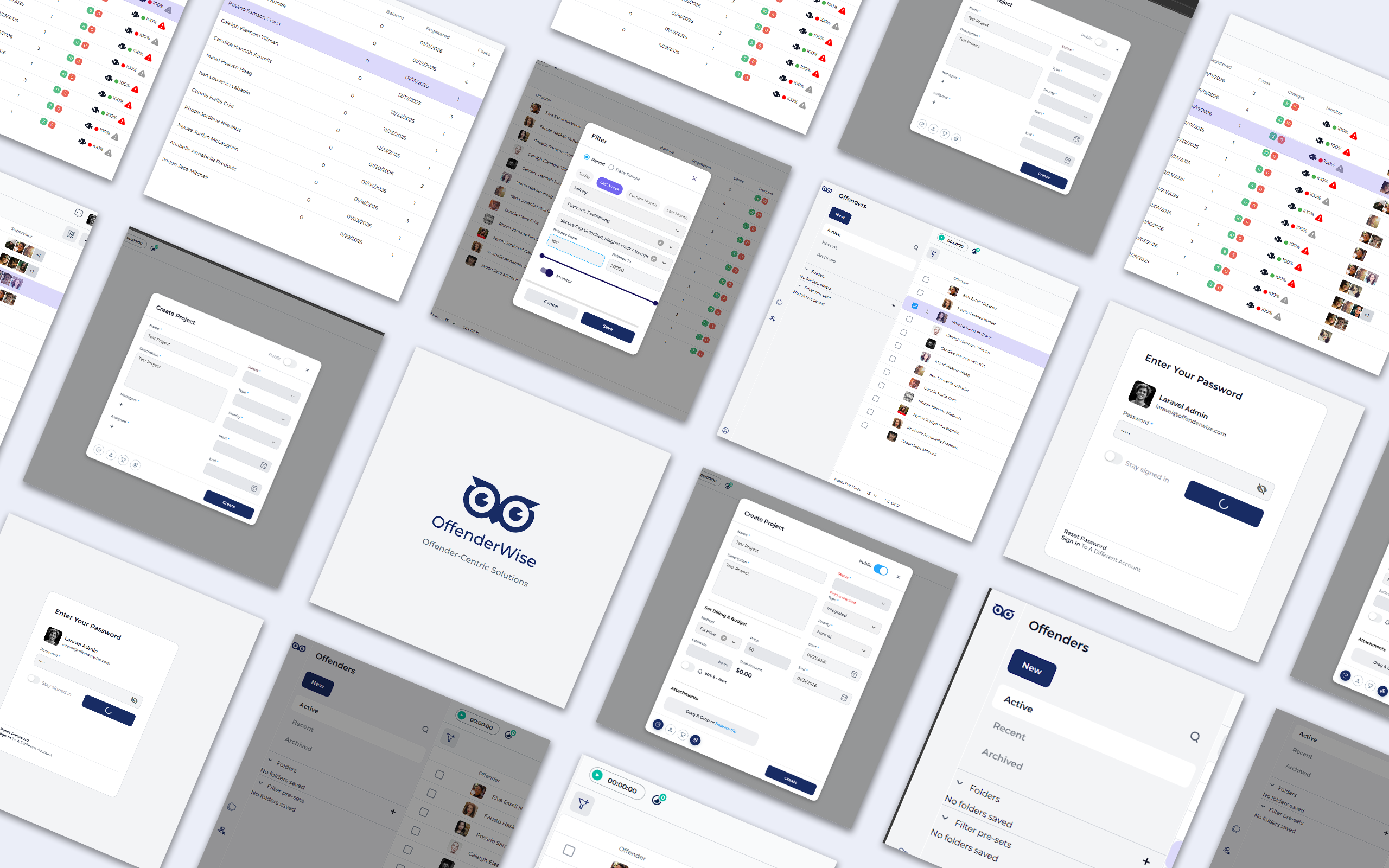
- Projects with statuses, priorities, fixed price budgets, estimates, alerts and timelines
- Time tracking across projects, tasks and subtasks for workload and billing justification
Check out the ui.
How it's built.
The fewest possible heavy forms on screen. Complex scenarios move into modals. Tabular screens for control, colour as a signal rather than decoration. Avatars denote responsibility, not personality. Calm, restrained, built for daily long term use.
What changed.
- All information about a supervised person is centralised and auditable
- Teams assess state visually and work proactively instead of reactively
- The team scales without reviewing every case by hand
A production system in a domain where a missed record has legal consequences, rather than an admin dashboard.