
Automarket
The problem.
Buying a car from abroad is a process with dozens of steps, low trust and opaque risk around customs, vehicle history and delivery. Nobody owns the whole chain.
For the dealer, the problem is the mirror image: selling the service chain rather than the car, scaling consultations without adding headcount, and capturing leads that would otherwise vanish into scattered messenger threads.
What we built.
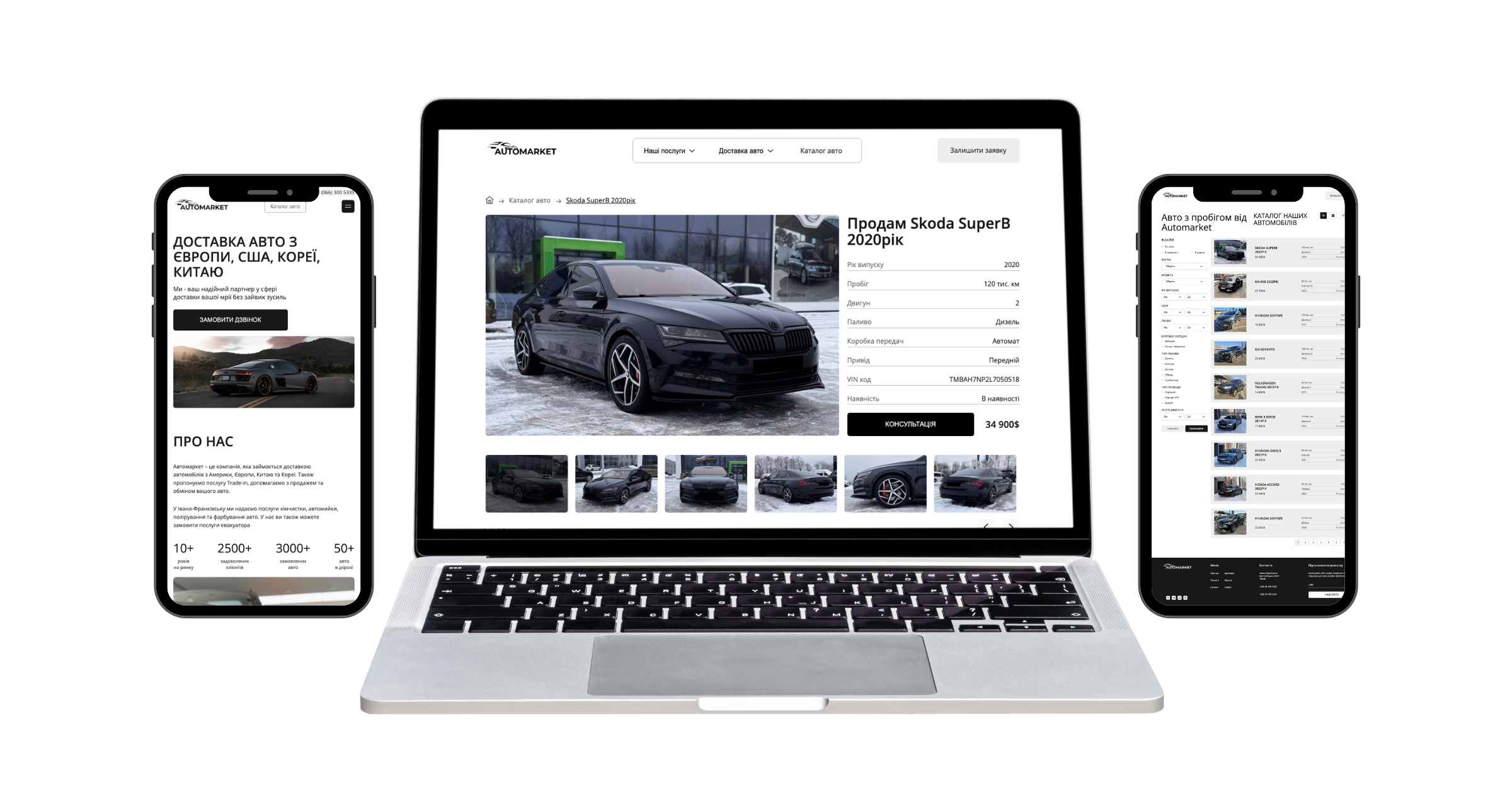
The digital front office of a dealership business. The full vehicle lifecycle on one platform: cars in stock and to order, import from the US, Europe, Korea and China, financing, trade in, towing, storage and servicing.
- Catalogue in list and grid modes, technical filtering, availability status
- Vehicle cards with photos, specifications, VIN, in stock or in transit
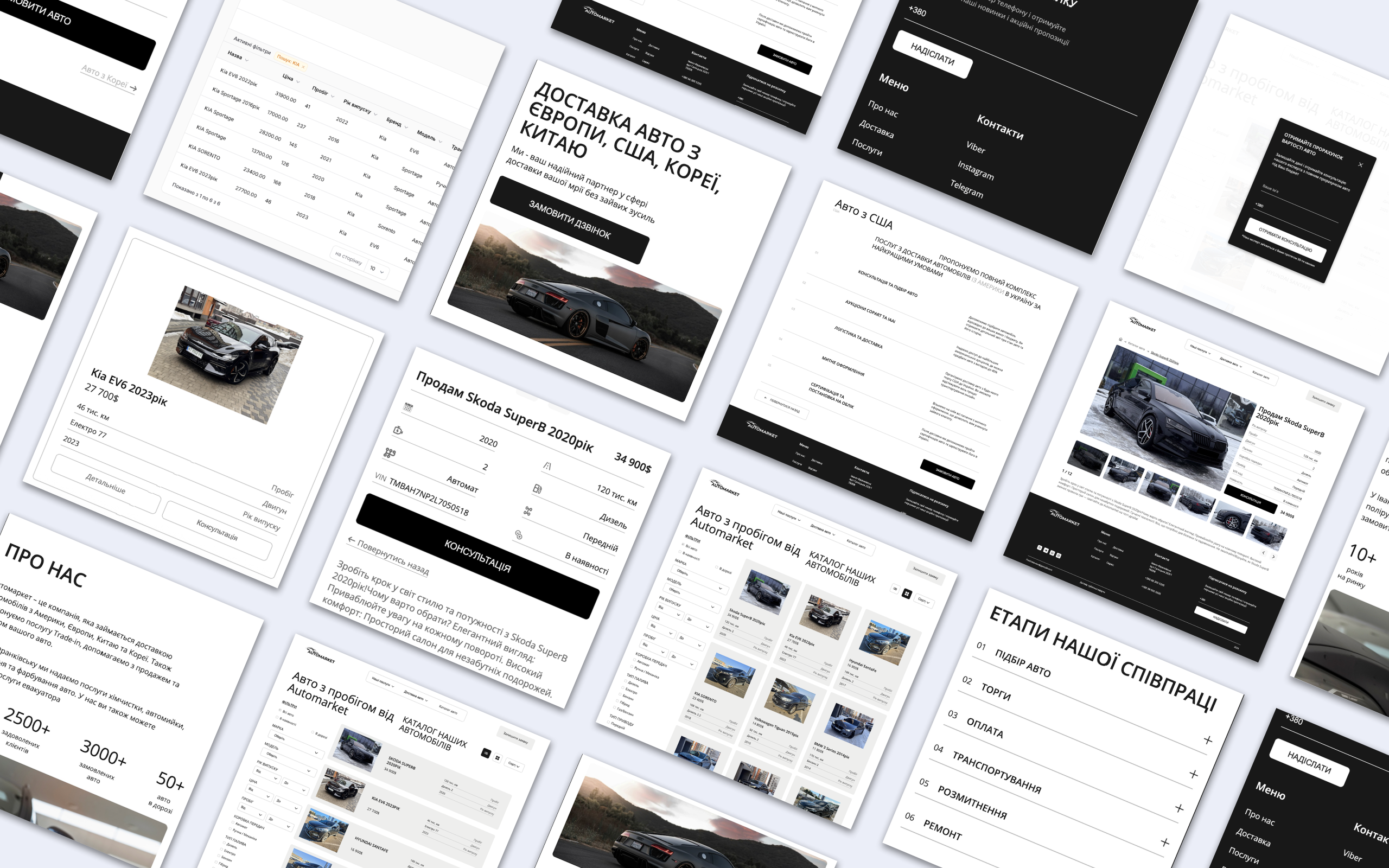
- Import to order flows per source region, described step by step
- Trade in, credit, towing, car park and service centre on one shared page pattern
- Lead capture at every entry point
Check out the ui.
How it's built.
Every action leads to a consultation, never to an unassisted order. One page pattern across all services: hero, value, stages, call to action. The catalogue works as a trust-building instrument, not as standard e-commerce. Detailed copy takes over part of the consultation, which lowers the load on both the buyer and the manager.
What changed.
- Filters and content pre qualify the buyer before the call
- Revenue beyond the vehicle margin: import commission, financing, add on services
- Consultation capacity grows without adding managers
- New countries and services are added without a redesign
A case study about product thinking and business architecture for a service chain, rather than just UI.