
Real Estate CRM
The problem.
Sales in construction run for months, are non-linear, involve many organisations, and often start without an inbound lead at all. The object exists before the deal does, and key decision-makers are rarely in the room.
Contacts, events and tasks scatter. Nobody can answer where a given object stands. Traditional CRMs force the team to adapt its workflow to a tool designed for short linear funnels.
What we built.
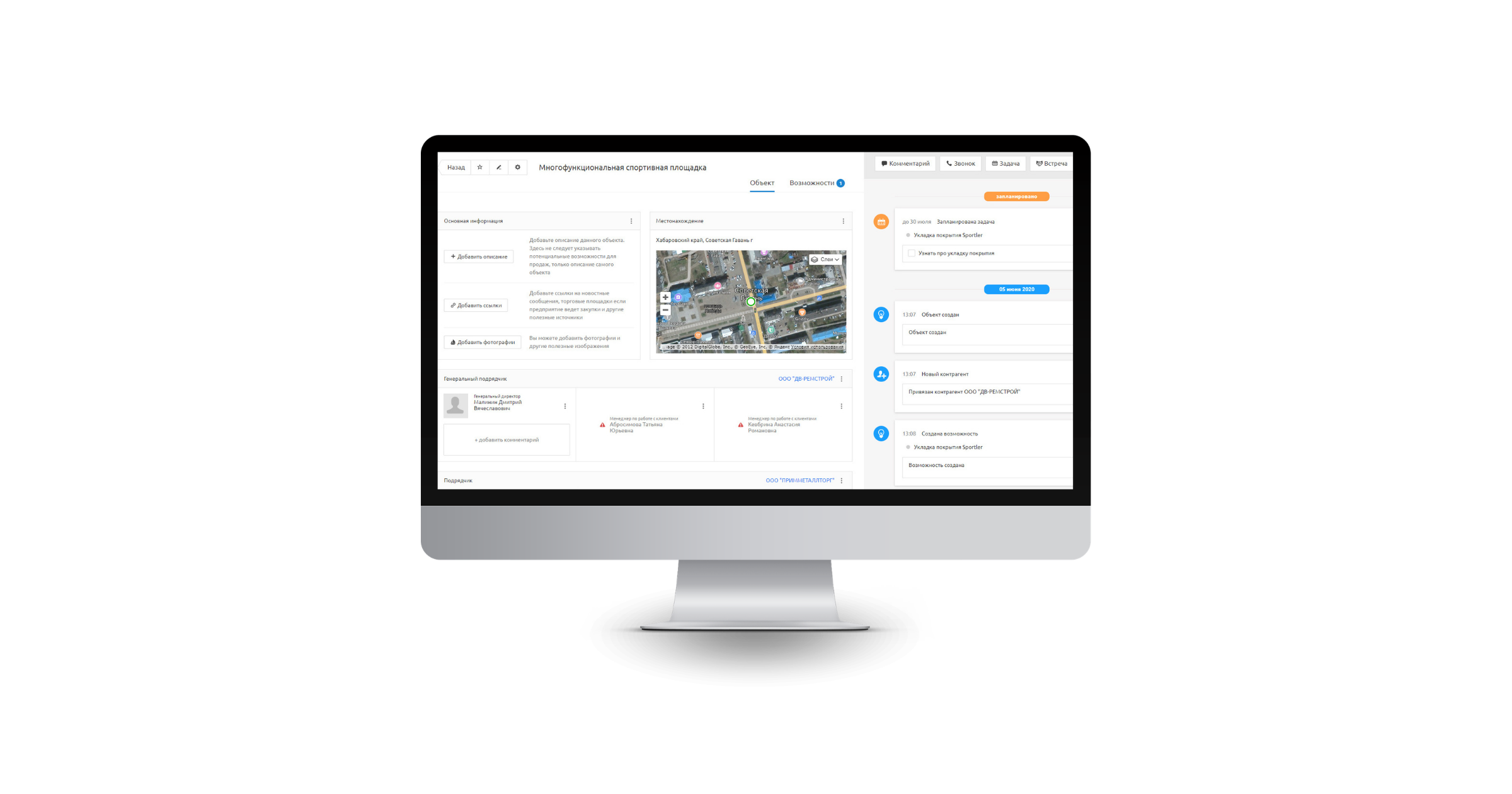
An object centric CRM. The object is the centre of gravity, and opportunities, counterparties, tasks, calls, meetings, comments, statuses, budgets and geography orbit around it.
One object holds many opportunities, each with its own lifecycle. The object outlives any single deal. It can go dormant and reactivate. Managers change, the history does not.
- Object creation or import with type, map location, description and budget ranges
- Stakeholder binding: general contractor, subcontractors, partners, contacts
- Opportunities per work type with status, budget and responsible manager
- An automatic event timeline showing the real life of an object over time
- Filtering by budget and partner, search, and soft pipeline logic
What changed.
- Pipeline visibility across regions and distributed sales teams
- Less context lost during long cycles and manager handovers
- Better collaboration between sales and project teams
- Higher quality forecasting and repeat sales on existing objects
A CRM adapted to the real B2B sales process, instead of a sales process adapted to a CRM.